
Finding a gorgeous bubblegum pink that survives a beach vacation used to be the main goal of a gel manicure. Those days are gone. Walk into any busy salon in New York or Los Angeles right now, and clients ask technical questions resembling a high school chemistry test rather than a routine beauty appointment. The American nail industry is navigating a massive structural shakeup. Salons are moving away from legacy formulations causing severe skin reactions, focusing heavily on modern molecular safety. Salon owners looking to protect their backbar inventory and retain high-value clients must adapt to the new standards governing UV curing systems.
Understanding Gel Chemistry: HEMA and TPO Realities
The industry conversation revolves tightly around HEMA and TPO. Hydroxyethyl methacrylate, known as HEMA, is an adhesion monomer historically utilized to bind polymer gel networks to the natural nail plate. Its small molecular weight allows it to penetrate compromised skin barriers during sloppy applications, leading to permanent acrylate contact dermatitis. Once a technician or client becomes sensitized, the immune response is lifelong, even complicating future dental procedures using similar composite resins. To avoid this hazard, understanding how to treat acrylate allergies in salons is becoming core to professional training.
Trimethylbenzoylphosphine oxide, or TPO, functions as the primary photoinitiator triggering the photo-polymerization process under ultraviolet radiation. Recent regulatory bans driven by European safety evaluations regarding reproductive toxicity have forced chemical reformulations across major global brands, following strict compliance adjustments similar to the latest EU cosmetics regulations on TPO and hazardous ingredients. Early clean alternatives suffered from poor self-leveling and gummy viscosities, but modern nail chemistry has successfully engineered large-molecule alternatives that preserve gloss without triggering allergen pathways.
Premium Professional HEMA-Free and TPO-Free Systems
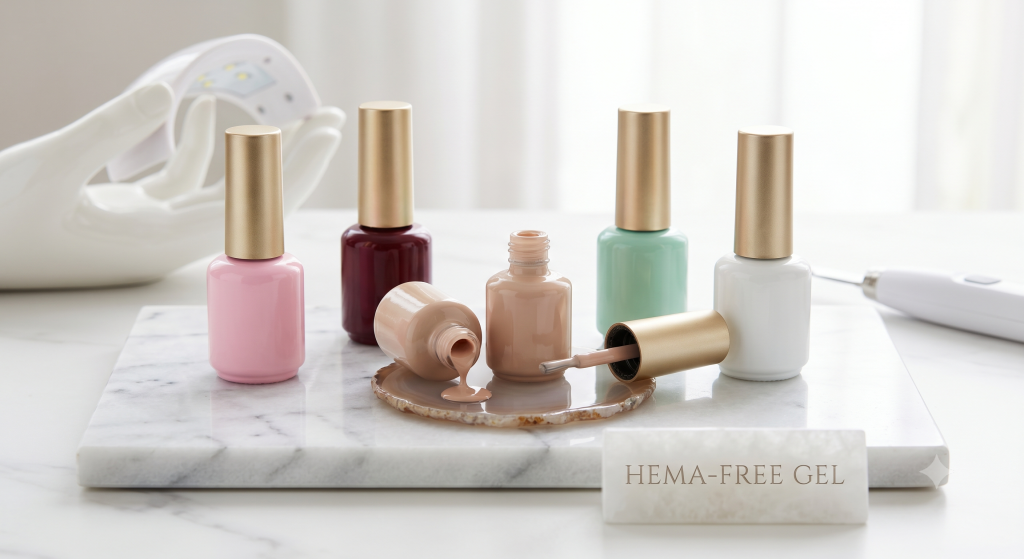
OPI Intelli-Gel Polish System
OPI recently overhauled its entire professional gel division, phasing out traditional GelColor for the Intelli-Gel line. Distributor data and Google aggregator scores position this system at a strong 4.4 out of 5 stars. It mimics the thin viscosity of classic nail lacquer while employing a smart-gel cross-linking network that eliminates brush strokes before curing. It delivers classic shades like Bubble Bath with zero regulatory liability.
Kiara Sky Gel Pro
For structured overlays and extended nail enhancements, Kiara Sky Gel Pro holds a highly competitive 4.7 out of 5 stars among nail technicians. The formula is entirely free of HEMA, Di-HEMA, and TPO. The standout feature is its high pigment concentration, which achieves full opacity in one coat, maximizing salon turnover rates during peak hours.
Light Elegance P+ Gel Polish
Manufactured strictly in Oregon under rigorous quality control, Light Elegance P+ maintains a premium 4.8 out of 5 stars ranking. This pro-only line focuses on hypoallergenic stability. The cured polymer structure remains highly flexible, moving naturally with weak nail plates to prevent premature chipping or painful onycholysis.
Madam Glam Pure Gel Line
A favorite among nail art specialists, Madam Glam Pure Gel commands a 4.8 out of 5 stars average. Offering an expansive library of over 1,800 vegan shades, its thicker, buttery viscosity provides superior control near the eponychium, preventing accidental skin contact during complex line work.
Performance Comparison: Hypoallergenic vs Traditional Formulations
| Gel System Type | Core Advantages | Key Drawbacks | Best Suited For |
| Modern HEMA-Free and TPO-Free | Lowers allergy risks, removes strong chemical odors, compliant with updated global safety standards. | Requires precise, brand-specific curing wavelengths, higher initial cost per unit. | High-end salons, sensitive clientele, and safety-conscious nail technicians. |
| Traditional Powerhouses | Rapid acetone penetration for quick removal, highly forgiving cure windows, lower cost per ounce. | High long-term risk of skin sensitization, relies on traditional photoinitiators facing bans. | High-volume, fast-turnaround walk-in nail salons. |
Traditional Formulations and Ongoing Salon Utilization
While clean beauty dominates consumer marketing, traditional formulations still maintain significant market share in high-volume commercial environments across cities like Houston and Chicago.
CND Shellac Pro
Retaining a 4.6 out of 5 stars industry benchmark, Shellac utilizes a specific hybrid polymer network rather than a pure gel base. Upon UV exposure, it forms tiny microscopic pathways allowing acetone to penetrate directly to the base layer during removal. This ensures a true fifteen-minute soak-off without requiring aggressive scraping or surface damage.
DND Daisy Gel
Holding a 4.5 out of 5 stars ranking, DND remains a staple for salon profitability. Though it relies on a standard HEMA-based formulation, it provides consistent two-week wear at a low cost per ounce. The inclusion of a matching regular lacquer for pedicure services streamlines inventory management for large walk-in salons, maintaining their standing among professional gel nail brands USA.
Professional Application and Curing Safety Standards
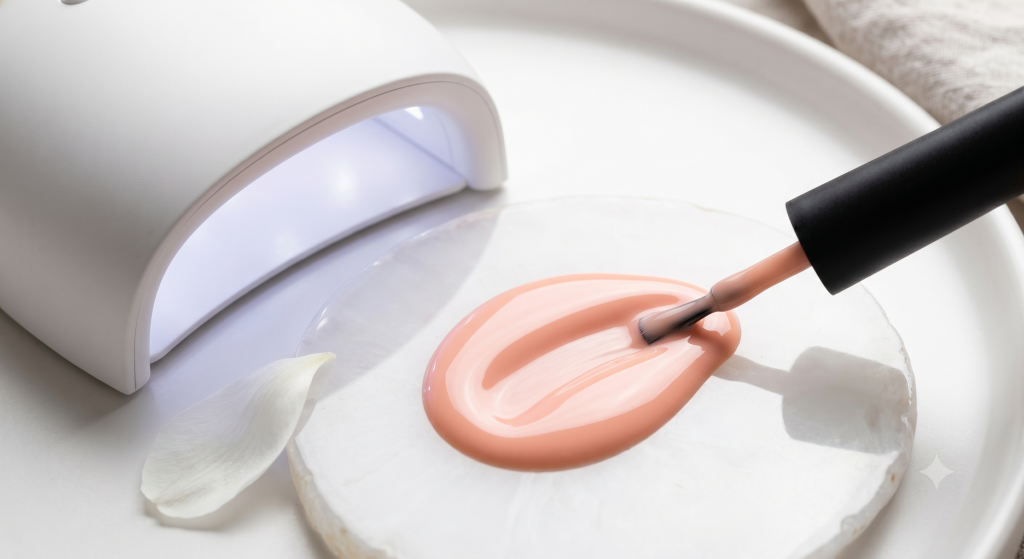
Transitioning to modern clean formulas requires exact adjustments in salon technique. Hypoallergenic monomers require flawless mechanical prep and specific energy outputs to achieve complete conversion during polymerization.
Bone-Dry Mechanical Preparation
Maximize physical adhesion across the nail bed by utilizing a precise 240-grit buffer instead of deep, aggressive chemical etching.
Deep Plate Dehydration
Cleanse the nail plate completely by wiping with a pure isopropyl alcohol and acetone blend to strip away lingering surface sebum.
Precise Chemistry Matching
Align your curing equipment to the specific brand chemistry. Alternative monomers react best under high-output, dual-wavelength LED lamps operating between 36W and 48W. Consult our comprehensive UV/LED lamp selection guide to avoid cheap, unbranded curing units that fail to cure deep layers.
Ultra-Thin Product Layering
Apply thin layers deliberately. Dense, HEMA-free pigments block light penetration easily, causing the gel to under-cure at the base while looking dry on top.
Clean Free Edge Capping
Seal the free edge cleanly during the base and color stages. This distributes mechanical stress evenly and prevents pocket lifting over time.
Strict Cuticle Margin Boundaries
Maintain zero skin contact. Wipe away uncured product immediately from the lateral folds before initiating the curing cycle to prevent sensitization.
Frequently Asked Questions
What is the chemical difference between HEMA-free and traditional gel nail polish? HEMA-free gel polish completely excludes hydroxyethyl methacrylate, a volatile low-molecular-weight adhesion monomer common in legacy formulas known for causing severe skin sensitization. Instead, modern clean systems utilize larger aliphatic oligomers and polyurethane methacrylates that cannot easily penetrate the cellular skin barrier, drastically lowering the risk of developing allergic contact dermatitis while maintaining strong mechanical adhesion. Traditional formulations rely on these tiny, aggressive monomers for cheap, rapid chemical bonding, but they pose a significantly higher threat of triggering an irreversible immune system response over time.
Can you use any standard LED lamp to cure a hypoallergenic, HEMA-free gel polish? No, generic or low-wattage salon lamps cannot properly cure modern hypoallergenic formulations due to the specific photo-polymerization requirements of alternative monomers. These advanced polymer networks require precise dual-wavelength spectral outputs, combining 365 nanometers and 405 nanometers, alongside a high radiant flux to ensure complete chemical conversion. Using a mismatched UV/LED unit often results in sub-surface under-curing, leaving highly reactive, mobile residual monomers trapped underneath a dry top coat matrix, which leads directly to service failure and severe skin irritation.
Why does HEMA-free professional gel polish exhibit a thicker viscosity during application? HEMA-free gel formulas often possess a higher viscosity index because manufacturers replace small, fluid monomers with heavy-weight, long-chain oligomers to achieve safe interfacial durability. This dense, thixotropic behavior requires deliberate, paper-thin application layers to prevent the product from pooling or experiencing capillary movement into the lateral nail folds. Technicians must adjust their brush ergonomics, wiping excess product back into the bottle neck and using light, sweeping tension to glide the gel smoothly across the natural keratin plate.
What are the primary clinical signs of a gel nail acrylate allergy? Early diagnostic signs of an acrylate allergy include intense local pruritus, erythema, localized swelling, or tiny vesicular eruptions developing around the eponychium and sidewalls within forty-eight hours of UV radiation exposure. Left unaddressed, this severe contact dermatitis can escalate to painful paronychia, permanent onycholysis, localized paresthesia, and lifelong systemic hypersensitivity to medical-grade plastics. If a client exhibits these symptoms, the polymer matrix must be completely dissolved immediately, and all future exposure to cross-linking acrylates must cease.
Does HEMA-free gel polish match the wear longevity of traditional gel systems? Yes, premium modern HEMA-free gel systems reliably deliver a full twenty-one day chip-free lifespan without any structural degradation or loss of gloss. Achieving this interfacial retention requires meticulous mechanical preparation with a 240-grit buffer and total chemical dehydration using an isopropyl alcohol and acetone blend, allowing the clean base coat to bond flawlessly to the dorsal nail plate layers. The advanced cross-linking density engineered by modern cosmetic laboratories ensures that flexibility and impact resistance match, and often exceed, older chemical formulas.
What is TPO in nail gel chemistry and why is it facing global regulatory bans? TPO, or trimethylbenzoylphosphine oxide, is a traditional photoinitiator facing strict international bans due to documented toxicological risks concerning reproductive toxicity and skin sensitization. Modern clean formulations swap this hazardous chemical for advanced, safer photoinitiator substitutes that trigger efficient free-radical polymerization without creating salon health liabilities. Eliminating TPO from your professional backbar inventory ensures compliance with evolving cosmetic safety standards and protects salon staff from chronic occupational exposure.
Can a client with an existing acrylate allergy use HEMA-free gel safely? Not automatically, because a hyper-sensitized immune system might trigger a cross-reactive response to other monomers, such as Di-HEMA trimethylhexyl dicarbonate, HPMA, or cyanoacrylates present in the formulation. While HEMA-free options are an excellent preventive measure for non-allergic clients, a localized patch test on a single digit is mandatory before executing a full service on previously sensitized individuals. Safety-conscious professionals must thoroughly audit the official INCI ingredient list to manage high-risk, sensitive clientele effectively.
Why do some modern HEMA-free gels cause an intense exothermic heat spike? An intense exothermic heat spike occurs when alternative, heavy-weight monomers undergo rapid chain-growth polymerization under high-intensity LED irradiance, releasing kinetic energy as thermal heat. Technicians can mitigate this painful reaction by utilizing a low-heat lamp mode, applying ultra-thin product layers, or pulling the hand out of the focal light path during the initial five seconds of the curing cycle. Thicker structural gel overlays generate higher molecular friction during cross-linking, making controlled, staged curing essential for client comfort.
How do you properly soak off HEMA-free gel without causing mechanical nail damage? To safely remove HEMA-free gel without compromising the natural nail plate, completely disrupt the hydrophobic top coat seal using a medium-grit abrasive file, then apply pure acetone saturation wraps for fifteen minutes. Avoid aggressive manual scraping with metal pushers, which causes catastrophic nail plate delamination; instead, gently nudge the swollen, dissolved polymer matrix off using an orange wood stick. Allowing the chemical solution to fully break down the covalent bonds preserves the delicate dorsal layer of the natural keratin structure perfectly.
Is Di-HEMA monomer just as dangerous as regular HEMA monomer? Di-HEMA is significantly safer than regular HEMA monomer because its molecular diameter is substantially larger, making it highly difficult for the chemical to leach through porous keratin or penetrate intact skin cells. However, sloppy salon application that permits prolonged contact with living tissue can still trigger acrylate sensitization over long periods, meaning strict margin boundaries remain vital. It represents an excellent, high-performance intermediary molecule for premium brands aiming to lower formula toxicity without sacrificing structural adhesion.
Why is my HEMA-free top coat peeling off after only a few days of wear? Premature peeling usually stems from an unpolymerized boundary layer caused by under-curing the dense, highly pigmented color coat beneath the top coat. It can also occur if the technician fails to cap the free edge cleanly during the base and color stages, leaving the oxygen inhibition layer exposed to moisture and environmental friction. Ensuring complete light penetration by using exact, brand-compatible curing equipment resolves this interfacial adhesion failure permanently.
Are professional HEMA-free gel brands worth the higher backbar investment? Yes, investing in professional clean formulations protects your salon business from long-term legal liabilities, occupational health hazards for your employees, and high client turnover driven by chemical allergies. Premium non-toxic brands also feature superior self-leveling capabilities and stable pigment dispersion that eliminate sedimentation, speeding up service times and boosting overall salon ROI. They effectively position a business as a modern, high-end, wellness-focused beauty destination.
Can under-cured gel polish trigger a permanent contact dermatitis allergy? Yes, sub-surface under-curing is the absolute leading cause of acrylate contact dermatitis because it leaves a hidden layer of raw, liquid monomers directly against the client’s nail bed. Over weeks of wear, these mobile, active chemicals slowly leach through the porous natural nail plate, causing irreversible immune system sensitization. Investing in a verified, high-output professional curing unit with correct spectral irradiance eliminates this hidden operational hazard entirely.
What LED lamp nanometer wavelength is required for modern clean gel formulas? Modern hypoallergenic gel polishes require a precise dual-wavelength spectrum combining 365 nanometers for surface curing and 405 nanometers for deep-layer polymerization. Professional lamps operating at a true thirty-six to forty-eight watts ensure complete molecular conversion, which generic, single-wavelength discount lamps simply cannot achieve. Matching the lamp’s light distribution curve to your specific gel brand chemistry guarantees total chemical safety and optimal retention.
Why do matching regular lacquer duos matter for salon inventory optimization? Matching regular lacquer duos streamline salon inventory management by allowing technicians to provide identical shades for coordinated manicure and pedicure services. Since hard or soft gel polish is rarely recommended for toenails due to micro-trauma and constriction risks in closed-toe shoes, having a chemically compatible, air-dry lacquer ensures perfect color continuity. This dual-product alignment keeps backbar storage efficient, professional, and profitable.
How does nail plate delamination happen during poor gel removal processes? Nail plate delamination occurs when technicians forcibly scrape away under-dissolved gel, tearing the delicate dorsal layers of natural keratin along with the cross-linked polymer matrix. This destructive mechanical trauma dramatically thins the natural nail plate, making future gel applications lift prematurely due to a total lack of structural integrity. Proper chemical breakdown with pure acetone removes the need for forceful scraping, preserving nail health.
Are vegan and 9-free gel polishes automatically HEMA-free? No, marketing terms like vegan, cruelty-free, or 9-free simply mean the formula excludes specific animal-derived components or standard industrial toxins like formaldehyde, toluene, and dibutyl phthalate. They do not guarantee the exclusion of cosmetic acrylic monomers, so professionals must carefully audit the official Safety Data Sheet (SDS) and INCI list for hydroxyethyl methacrylate. True chemical safety requires inspecting the exact molecular composition of every bottle.
What should a nail technician do immediately if gel accidentally touches the cuticle? If uncured gel touches the eponychium or lateral folds, the technician must immediately remove the residue completely using a clean brush saturated with isopropyl alcohol before initiating the cure cycle. Allowing the product to enter the UV lamp while touching living tissue instantly initiates photo-polymerization directly on the skin, skyrocketing allergy risks. Keeping a crisp, one-millimeter margin barrier around the skin ensures clean growth and absolute protection.
Can I mix a traditional gel base coat with a HEMA-free color coat? Mixing different gel brands or formulas is highly discouraged because traditional base coats still contain highly allergenic monomers that sit directly against the natural nail plate. Furthermore, mismatched chemical properties can disrupt the cross-linking process during photo-polymerization, resulting in premature cracking, wrinkling, or interfacial lifting. For predictable twenty-one day retention, always deploy a single, unified brand system from base coat to top coat.
How do current regulatory chemical bans impact American nail salons? The current regulatory crackdowns force American salons to transition their backbar inventory toward verified non-toxic, future-proof gel systems to maintain liability compliance and protect worker health. Salons that proactively market their clean chemistry systems attract a premium, health-conscious demographic while ensuring an entirely odor-free, non-hazardous working environment under OSHA standards. Transitioning early safeguards your business longevity against changing domestic and international cosmetic safety legislation
Strategic Salon Portfolio Planning
Upgrading a professional backbar to modern HEMA-free and TPO-free gel systems is a proactive business strategy rather than a passing trend. Protecting technicians from occupational exposure and shielding clients from severe dermatological issues builds long-term brand equity. Evaluating your current inventory, testing professional starter kits from compliant manufacturers, and marketing your salon as a health-conscious destination will safeguard your business longevity.
