
A shift I’ve seen happening right in front of me
Not long ago, one of my regular clients texted me late in the evening asking if I could come to her place instead of seeing her at the salon. She had a long day at work, didn’t want to drive, and honestly just wanted to sit in her own space.
That kind of request used to be rare. Now it’s part of my weekly schedule.
After more than 20 years working in the nail industry across the U.S., I’ve learned to pay attention when client behavior changes. Styles come and go. Acrylic, gel, dip powder, they all cycle. But this shift toward mobile nail services feels deeper than a trend.
People aren’t just changing what they wear on their nails. They’re changing how they want the service delivered.
Searches like “mobile nail technician near me” reflect that shift. It’s about convenience, but it’s also about control, comfort, and time.
What a mobile nail appointment actually looks like today
There’s still a misconception that mobile nail services are limited or basic. That might have been true years ago, but not anymore.
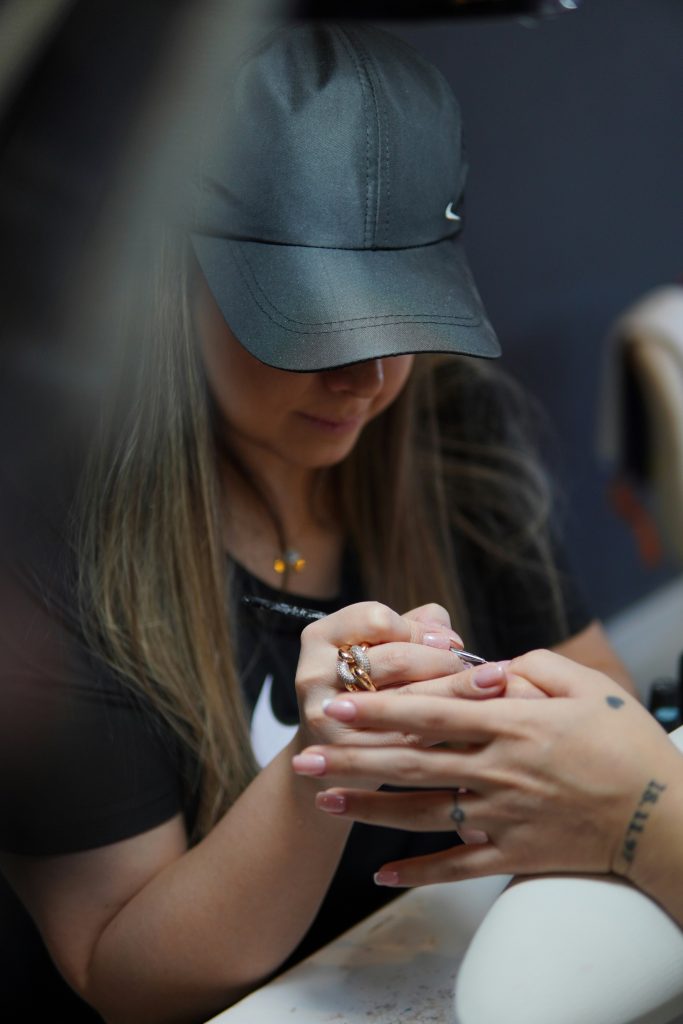
A professional mobile nail technician today carries a full working setup. That includes an electric file, LED or UV lamp, sanitation tools, gel polish systems, builder gel, dip powder, and a curated range of nail colors and finishes. Chrome powders, soft French tips, minimalist designs, all of that is very doable on the go.
The experience itself feels different from a traditional nail salon. There’s no waiting area. No overlapping appointments. The technician arrives, sets up, and focuses entirely on one client.
Booking is also more streamlined now. Clients discover services through search, platforms, or social media, review portfolios, then schedule directly. Many mobile nail techs use platforms that act as a digital storefront, helping them show services, pricing, and availability in one place.
For the client, it feels simple. For the technician, it requires preparation and consistency.
Why clients are choosing mobile nail services more than ever
Convenience is the first thing people mention, but it’s not the whole story.
Clients are trying to protect their time. Driving to a nail salon, waiting, getting the service done, then heading back, it adds up. A mobile appointment removes that entire layer.
There’s also a strong preference for privacy. Not everyone wants the busy, sometimes noisy environment of a nail salon. Some clients prefer a quieter setting where they can relax, take calls, or just enjoy the process without distraction.
Hygiene plays a role too. Clients are more aware of sanitation practices now. When a nail technician works in a controlled, one-on-one setting, it builds a different level of trust.
What I’ve noticed is that once clients try mobile services, many of them don’t go back to the old routine unless they want a social salon experience.
How mobile nail services compare to traditional salons
Both models serve a purpose. It depends on what the client values most.
Here’s how I usually explain it based on real experience:
| Feature | Mobile Nail Technician | Traditional Nail Salon |
|---|---|---|
| Convenience | Very high, service comes to you | Moderate, requires travel |
| Time efficiency | High, no waiting | Varies, often includes wait time |
| Personalization | One-on-one focused service | Shared attention in busy setting |
| Hygiene control | More controlled environment | Depends on salon practices |
| Equipment setup | Portable but professional | Full station with all tools |
| Pricing | Slightly higher | Typically standard pricing |
| Atmosphere | Private and calm | Social and active |
Neither is better across the board. They simply meet different needs.
The real pros and cons from both sides
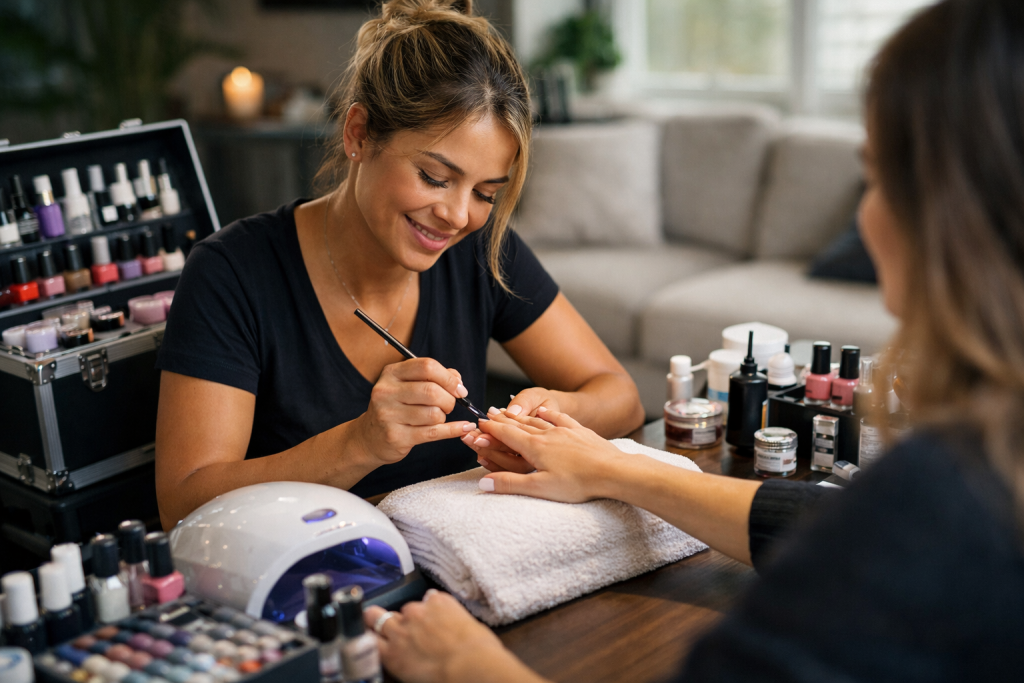
From the client side, the advantages are clear. No commute, no waiting, and a more personalized experience. It’s especially useful for events like weddings or small group bookings where everyone wants to stay in one place.
But there are trade-offs. Mobile services often cost more. Scheduling can be tighter since each appointment is individual. And not every home environment is ideal for a full setup.
From the technician side, the benefits include lower overhead and more flexible scheduling. There’s no salon rent, and relationships with clients tend to be stronger because of the one-on-one nature of the service.
At the same time, mobile work comes with its own challenges. Travel time affects the day. Equipment has to be packed, transported, and set up properly every time. Planning becomes a big part of the job.
It’s a different kind of discipline compared to working in a fixed nail salon.
Why current nail trends work perfectly with mobile services
If you look at what clients are asking for in 2026, it fits naturally with mobile work.
Short to medium nail lengths are more popular now. Shapes like almond, soft square, and natural oval are easier to maintain and better suited for everyday life.
Color trends are leaning toward neutral tones. Milky white, soft pink, beige, and subtle shimmer finishes. Even when clients choose something bold, it’s often paired with a clean base or a simple design.
These styles don’t require extreme setups or long sculpting sessions. They focus more on precision, finish, and detail.
For a mobile nail technician, that’s ideal. It allows for high-quality results without needing the full space of a traditional salon.
How to start a mobile nail business the right way
I’ve seen a lot of new technicians jump into mobile services because it looks flexible. And it can be. But the foundation still matters.
First, licensing and compliance. Every state has its own requirements, and that part can’t be skipped.
Second, invest in reliable tools. A good electric file, proper sanitation equipment, and quality nail products make a noticeable difference in both results and client trust.
Third, keep your service menu clear. Don’t try to offer everything at once. Focus on what you can do consistently well, whether that’s gel manicures, dip powder, or structured gel.
Then comes visibility. Clients need to find you. That means having a presence where people are actually searching, not just posting on social media and hoping for the best.
Consistency builds a client base. Not shortcuts.
How clients can find a reliable mobile nail technician
From a client’s perspective, choosing the right technician comes down to a few practical steps.
Look at real work. Consistency across photos matters more than one perfect image.
Read reviews carefully. Patterns tell you more than isolated opinions.
Ask about sanitation practices. A professional should be able to explain how tools are cleaned and stored.
Check what products are being used. Many clients now prefer cleaner formulations or specific brands.
And don’t base your decision only on price. Lower cost often means compromises somewhere, whether in time, product quality, or experience.
Frequently Asked Questions About Mobile Nail Services
How much does a mobile nail technician cost in the U.S.?
The cost of a mobile nail technician near you typically ranges from $60 to $150, depending on the service and location. A gel manicure or at-home manicure service is usually on the lower end, while acrylic nails, dip powder, or builder gel sets cost more. Pricing also reflects travel time, personalized service, and the convenience of a mobile nail salon.
Are mobile nail services hygienic and safe?
Yes, mobile nail services can be very hygienic when performed by a licensed nail technician. Most professionals use sanitized tools, disposable files and buffers, and follow strict sanitation protocols. Since it’s a one-on-one appointment, many clients feel mobile nail salons offer better hygiene control than busy nail salons.
What services can a mobile nail technician provide?
A professional mobile nail technician can offer a full range of services, including gel manicure, acrylic nails, dip powder nails, builder gel, and custom nail art. Many also provide pedicure services depending on the setup. Popular 2026 trends like minimalist nails, chrome finishes, and neutral tones are easily done in a mobile setting.
How do I book a mobile nail technician near me?
You can find and book a mobile nail technician through local search, booking platforms, or social media. Most technicians have a digital profile where you can view their nail designs, services, pricing, and availability. Searching “mobile nail technician near me” is still one of the fastest ways to find trusted local providers.
How long does an at-home manicure appointment take?
An at-home manicure usually takes between 60 to 120 minutes, depending on the service. A gel manicure is quicker, while acrylic nails, dip powder, or detailed nail art designs require more time. Mobile nail services often feel more efficient since there’s no waiting like in a traditional nail salon.
Do mobile nail technicians bring all their equipment?
Yes, a professional mobile nail salon setup includes everything needed for the appointment. This typically includes an LED lamp, electric file, nail tools, gel polish, acrylic systems, and sanitation supplies. Some technicians also bring portable lighting to ensure high-quality results.
Can I book same-day mobile nail services?
Same-day mobile nail service may be available depending on the technician’s schedule and your location. However, experienced nail technicians are often fully booked, especially on weekends or evenings. Booking in advance is recommended if you want a specific time or service.
Is tipping expected for mobile nail services?
Tipping is standard for mobile nail services in the U.S., just like in a nail salon. Most clients tip around 15 to 20 percent based on the quality of service. Since mobile nail technicians provide personalized, at-home services, tipping is also a way to show appreciation and build a long-term client relationship.
If you’re exploring mobile nail services for the first time, start by searching for a mobile nail technician near you, review their work, and choose someone whose style and service match your needs.
Where this is all heading
The biggest change I’ve seen over the years is this. The industry used to revolve around the salon location. Now it revolves around the client.
Mobile nail services are part of that shift.
They’re not replacing traditional nail salons. They’re expanding what’s possible. Giving clients more control over how and where they receive services. Giving technicians more flexibility in how they build their business.
And once people get used to that level of convenience, they don’t easily go back.
That’s why this isn’t just a trend. It’s a new way of working in the nail industry.
