
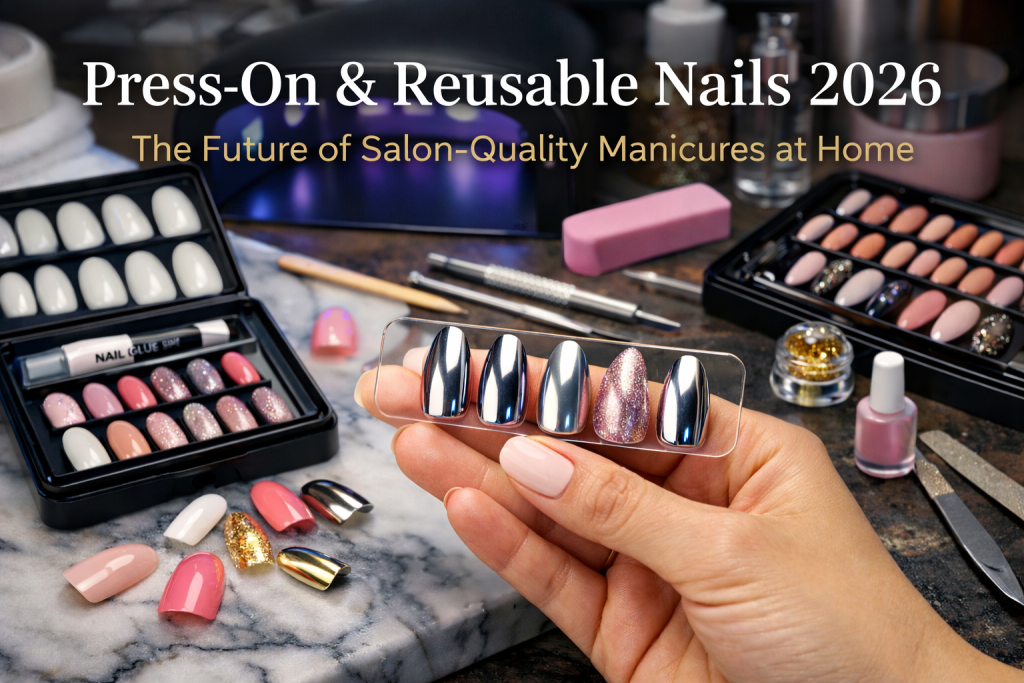
A quiet shift happening in the nail industry
I still remember the first time a client came into the salon wearing press-on nails that actually fooled me.
This was a few years ago. She sat down at my station, and I glanced at her hands while asking the usual question about what service she wanted that day. The manicure looked clean. The cuticle area was smooth, the shape was a soft almond, and the finish had that glossy gel look most technicians recognize right away.
I assumed she had gone to another salon.
She smiled and said she applied them herself at home.
If you had worked in the nail industry twenty years ago like I did, that moment would have sounded almost impossible. Back then press-ons were something people grabbed at the drugstore before a party. They were quick, but they rarely looked natural and they usually popped off after a few days.
Things are different now.
Press-on nails and reusable nail sets have evolved into something much closer to professional manicures. The materials are better, the designs follow real salon trends, and clients now see them as part of their beauty routine instead of a temporary fix.
From where I stand after two decades working behind a nail table, this shift is not replacing professional nail services. It is expanding how people experience nails.
What press-on and reusable nails actually are today
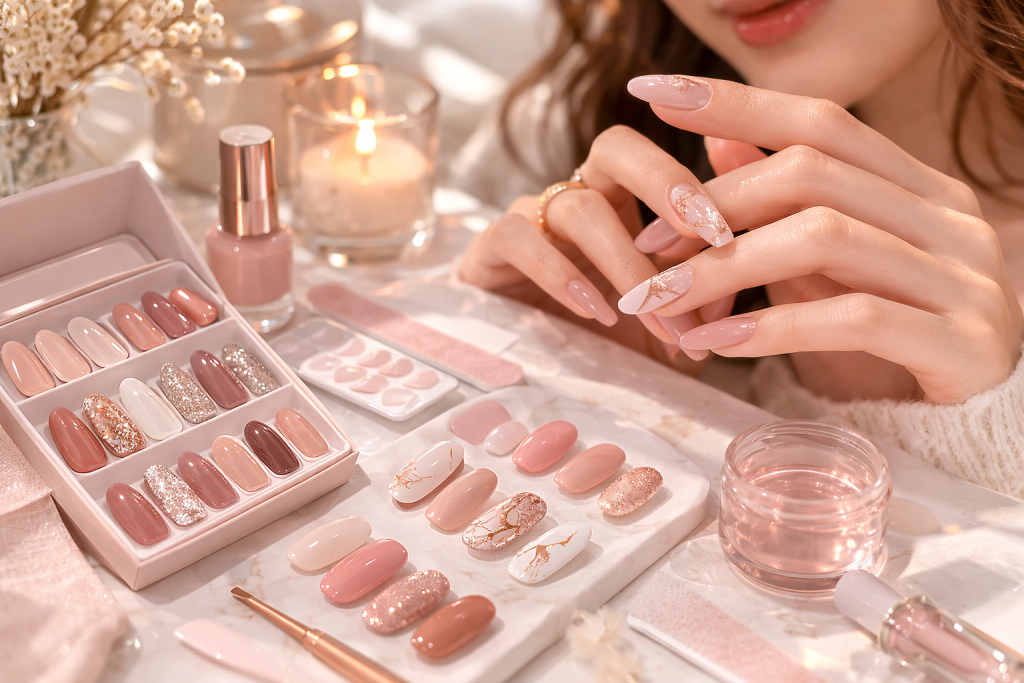
Press-on nails are pre shaped artificial nails designed to attach to the natural nail using adhesive tabs or nail glue. That definition has not changed much over time.
What has changed is the quality and the purpose.
Modern press-on sets are designed to mimic salon systems such as gel manicures, acrylic extensions, or builder gel overlays. Many are made from flexible materials that feel thinner and more natural than older plastic tips.
Reusable press-on nails take the idea further. These sets are built with stronger materials so they can be removed carefully, cleaned, and worn again several times.
Today the category includes several different types.
Some sets are simple single wear options. Others are handmade nail sets created by professional nail artists. There are also gel based press-on nails that offer a softer feel and a glossy finish similar to a gel manicure.
Even technology is starting to enter the nail world. Some experimental designs allow press-on nails to change color using mobile apps and small electronic components. While that technology is still new, it shows how nails are slowly blending fashion with wearable tech.
Why press-on nails are suddenly everywhere
Beauty trends rarely explode overnight. Usually they build slowly until a few changes line up at the same time.
Press-on nails gained momentum because of three simple factors.
Time is the first one. Many clients today juggle remote work, commuting, family responsibilities, and packed schedules. Sitting in a salon chair for an hour every two weeks is not always realistic.
Cost is another factor. A high quality reusable nail set may cost about the same as a single salon visit, but it can be worn several times.
Flexibility might be the biggest reason. Clients like being able to change their manicure depending on the week. A subtle neutral design for the office, something more playful for a weekend event.
Nail trends themselves also encourage experimentation. Minimalist manicures with milky white polish and soft nude tones remain popular. At the same time textured chrome finishes, graphic nail art, and layered designs are showing up across salons and social media.
Press-on nails allow people to try these looks without committing to a full salon service.
Press-on nails compared with traditional salon manicures
Clients often ask if press-on nails are better than gel or acrylic nails.
That question usually misses the point. These options serve different needs.
Here is a practical comparison based on what I see in everyday salon work.
| Feature | Press-On Nails | Gel Manicure | Acrylic Nails |
|---|---|---|---|
| Application time | Around 15 minutes | 45 to 60 minutes | 60 to 90 minutes |
| Typical cost | Lower cost | Moderate cost | Higher cost |
| Durability | About one to two weeks | Two to three weeks | Three to four weeks |
| Reusability | Often reusable | Not reusable | Not reusable |
| Nail damage risk | Low with proper removal | Moderate | Higher if over filed |
| Salon visit required | No | Yes | Yes |
Professional salon services still deliver the longest lasting results, especially when using acrylic systems or dip powder.
Press-on nails offer speed and flexibility. Many clients now move between both options depending on their schedule and lifestyle.
The honest pros and cons of press-on and reusable nails
Press-on nails have real advantages, but they are not perfect.
One clear advantage is speed. Even beginners can apply them with a bit of practice.
They are also budget friendly compared with regular salon visits. For clients who enjoy changing nail designs frequently, reusable sets make experimentation easier.
Another benefit is reduced chemical exposure. When applied and removed carefully, press-on nails usually involve less filing and soaking than traditional enhancements.
But there are limitations.
Durability is the most common issue. Press-ons typically do not last as long as acrylic or structured gel manicures.
Quality also varies widely. Lower cost sets sometimes look thick or unnatural.
Clients who work with their hands all day may also experience lifting earlier than expected.
The difference between a good experience and a frustrating one often comes down to proper nail preparation.
How to apply press-on nails so they actually last
After years in the salon I can say one thing confidently. Nail preparation determines how long any manicure lasts.
Press-on nails are no different.
The natural nail should first be cleaned and free of polish. Cuticles should be gently pushed back so the press-on nail sits flat against the nail plate.
A light buff removes surface shine and helps adhesive grip the nail. After that, wiping the nail with alcohol or a nail dehydrator removes natural oils.
Choosing the correct size press-on nail is also important. The artificial nail should cover the natural nail without touching the skin.
Once adhesive is applied, pressing the nail firmly for twenty seconds helps secure the bond.
When this process is done carefully, press-on nails can stay in place surprisingly well.
How to remove and reuse press-on nails without damaging natural nails
The biggest mistake people make with press-on nails happens during removal.
Pulling them off quickly can peel layers from the natural nail plate.
A better method is slower and gentler.
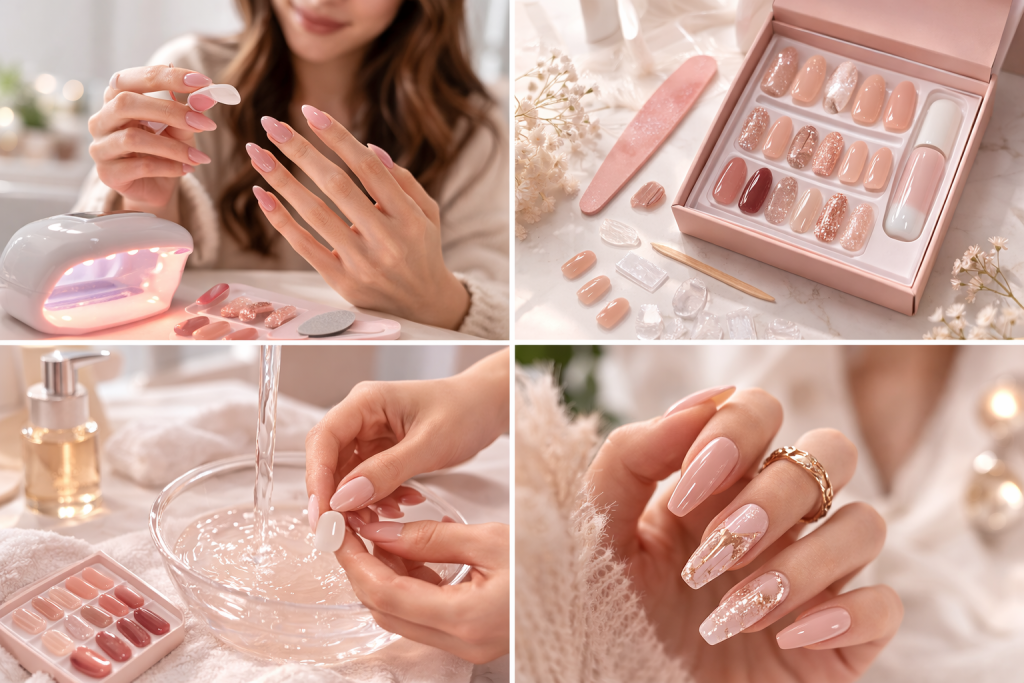
Soaking nails in warm water softens adhesive. Adding a little cuticle oil around the edges helps loosen the bond. Once the adhesive softens, the nail can be lifted carefully with a wooden stick.
Reusable sets should be cleaned before storing them.
Old glue can be gently removed from the underside of the nail. Wiping the surface with alcohol keeps the set hygienic before placing it back in its case.
With proper care, many reusable press-on sets can be worn several times.
The nail trends shaping press-on designs in 2026
The designs showing up in press-on nail collections look very similar to what technicians are creating in salons.
Minimalist manicures remain popular. Milky white nails, soft blush tones, and neutral shades work well for everyday wear.
Textured finishes are also gaining attention. Chrome powders, velvet effects, and layered gloss surfaces add depth without making the manicure look too busy.
Color trends continue to evolve as well. Blues, earthy greens, and warm browns are appearing alongside classic red and pink shades.
In terms of shape, natural looking styles dominate. Almond nails, oval shapes, and short square nails are practical for daily life and translate well to press-on designs.
Very long dramatic shapes still appear in fashion photography, but most clients prefer moderate lengths that feel comfortable throughout the day.
How salons are adapting to the press-on nail movement
When press-on nails started gaining attention again, some salon owners worried it might reduce in salon services.
The reality has been more interesting.
Many salons are incorporating press-on nails into their business models.
Some technicians create custom press-on sets for clients who want professional designs they can apply at home. Others sell curated collections that reflect seasonal nail trends.
This approach allows salons to extend their work beyond the physical salon chair.
Clients can still enjoy professional nail artistry while having the flexibility of applying nails on their own schedule.
Frequently Asked Questions About Press-On Nails and Reusable Nail Sets
Are press-on nails damaging to natural nails
Press-on nails are generally considered a safer alternative to heavy nail enhancement systems when used properly. Unlike acrylic nails or hard gel extensions, press-ons usually require minimal filing on the natural nail plate. With proper nail prep, gentle adhesive removal, and regular cuticle care, most clients experience little to no damage to their natural nails.
How long do press-on nails usually last
High quality press-on nails typically last anywhere from five days to about two weeks. The durability depends on several factors such as nail preparation, the strength of the nail glue or adhesive tabs, and everyday activities like washing dishes or typing. When the natural nail is properly buffed, dehydrated, and sized correctly, press-ons can hold surprisingly well.
What is the difference between press-on nails and a gel manicure
Press-on nails are pre designed artificial nails that attach to the natural nail using adhesive tabs or nail glue. A gel manicure, on the other hand, uses gel polish that is cured under a UV or LED nail lamp directly on the natural nail. Gel manicures usually last longer, but press-on nails offer quicker application, easy removal, and more flexibility for changing nail styles.
Can reusable press-on nails really be used more than once
Reusable press-on nails are specifically designed for multiple applications. After removal, the underside of the artificial nail should be cleaned to remove leftover glue and adhesive residue. When stored properly in a clean nail case, many reusable nail sets can be worn three to five times depending on the material quality and daily wear.
Do press-on nails look as natural as salon manicures
Modern press-on nails have improved significantly in terms of shape, thickness, and nail design quality. Premium press-on nail sets now closely resemble salon gel manicures, especially when the nail size fits correctly and the cuticle area is aligned properly. Designs such as almond nails, short square nails, chrome finishes, and minimalist nude tones can look nearly identical to professional nail services.
What is the proper way to prepare nails before applying press-on nails
Proper nail preparation is the most important step for long lasting press-on nails. Start by removing old nail polish and gently pushing back the cuticles. Lightly buff the natural nail surface to remove shine, then cleanse the nail plate with alcohol or a nail dehydrator to remove oils. Correct nail sizing and even nail glue application help ensure better adhesion and longer wear time.
How do you remove press-on nails safely without damaging the nail plate
The safest way to remove press-on nails is to soften the adhesive before lifting the artificial nail. Soaking the fingers in warm water mixed with soap helps loosen nail glue. Applying cuticle oil around the nail edges allows the press-on to slide off more easily. Using a wooden cuticle stick instead of forcing the nail off protects the natural nail surface.
Are press-on nails better than acrylic nails or dip powder nails
Press-on nails are not necessarily better than acrylic nails or dip powder nails, but they offer different advantages. Acrylic and dip powder systems provide stronger structure and longer durability for nail extensions. Press-on nails provide faster application, less chemical exposure, easier nail removal, and the ability to change nail designs frequently.
Are press-on nails a good option for weak or brittle nails
Press-on nails can work well for clients with thin or brittle nails because they usually involve less aggressive filing compared with acrylic enhancements. When combined with good nail care practices such as cuticle oil, nail strengtheners, and proper removal methods, press-ons can help protect the natural nail while still allowing clients to enjoy stylish manicures.
Can professional nail salons sell custom press-on nail sets
Yes, many professional nail salons now offer custom press-on nail sets as part of their services. Nail technicians create handmade nail designs based on the client’s preferred nail shape, color palette, nail art style, and seasonal trends. Custom press-ons allow clients to enjoy professional nail artistry while applying the nails at home whenever they want a quick manicure change.
Final thoughts from someone who has watched the industry change
When I started working in nail salons more than twenty years ago, press-on nails were not something professionals talked about seriously.
They were considered a temporary solution.
Today they are part of a much bigger conversation about convenience, creativity, and how beauty routines fit into modern life.
Some clients still prefer the experience of sitting in a salon chair, chatting with their nail technician while getting a fresh gel manicure. Others like the freedom of applying nails at home before heading out for the evening.
Both experiences have their place.
The nail industry has always evolved alongside the people who love it. Press-on nails are simply the latest chapter in that story.
